

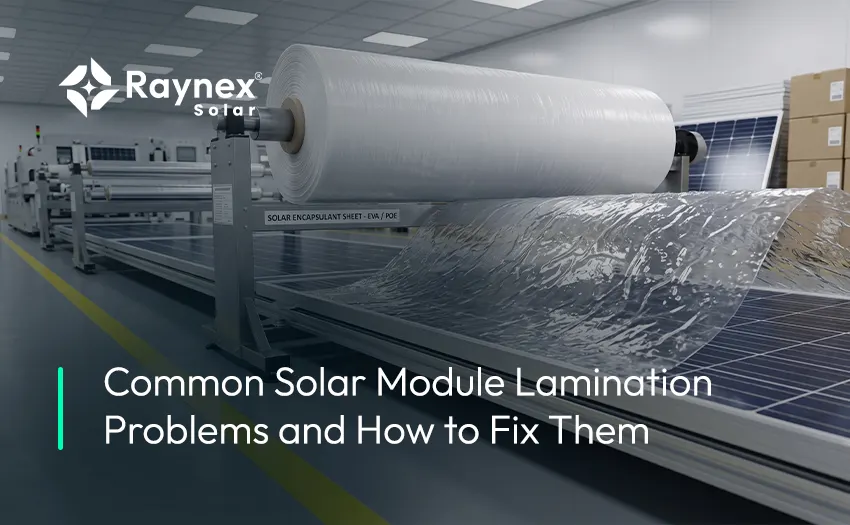
A solar panel has an expected lifespan of more than 25 years. To achieve this, every step of the manufacturing process must be completed with great care, especially lamination. Even a minor error in the lamination process can compromise the strength and functionality of the panel.
Solar module lamination problems can lead to manufacturers having quality problems, product failures, and an increase in the cost of production. Fortunately, almost all problems can be avoided with suitable materials, good machine adjustment, and a regular check of quality.
In this guide, we provide an overview of the most common lamination defects, their causes, and solutions that can be applied in simple language.
The lamination is a crucial step for solar panels since it protects the delicate solar cells from moisture, dust, UV exposure, and mechanical damage. The Solar module lamination process involves the use of heat and vacuum pressure to seal glass, encapsulant (EVA or POE), solar cells, and the backsheet into a single structural component.
The result is a multifunctional combination with good electric insulation and high mechanical strength that makes the operation of solar panels effective for a long period of time.
Solar panel laminator faults can occur even to an advanced manufacturer if the process parameters are not maintained properly. Here below are the common defects that can be encountered while doing lamination.
Air bubbles are small pockets of trapped air that form inside the solar module after lamination. This usually occurs when the vacuum is not strong enough, moisture is in the materials, or dust is left between the layers. Air bubbles can lower the overall quality of the module and may let moisture in over time, which affects its long-term reliability.
Delamination is a fancy word for when the layers of the panel start to peel apart. This is one of the most serious common solar panel defects because it usually cannot be fixed once the panel is finished. You can spot delamination by looking for white, cloudy patches or areas where the backsheet looks like it is lifting away from the glass.
This usually happens because the glue material did not cure or set properly. If the temperature in the laminator was too low, the chemicals did not react correctly to create a strong bond. Once layers start to separate, moisture gets in easily. This causes the power output of the panel to drop significantly, and eventually, the panel will stop working altogether.
Poor adhesion of the encapsulant means poor bonding between the encapsulant and the glass, solar cells, or backsheet. This is usually due to dirty surfaces, wrong laminate settings, or insufficient curing. Weak adhesion weakens the structure of the module and increases the likelihood of delamination in the future.
Have you ever seen an old solar panel that looks yellow or brown? This is often caused by the EVA in solar layer breaking down. It is one of the solar module lamination problems related to heat and chemical quality. If the lamination temperature is set too high for too long, it can “cook” the plastic, causing it to turn yellow immediately.
Yellowing can also happen over time if the manufacturer used cheap EVA that doesn’t handle UV light well. When the plastic turns yellow, it blocks sunlight from reaching the solar cells. This means the panel produces less electricity. It also makes the panel get much hotter, which can lead to even more damage.
Cell movement happens when solar cells change their original position during the lamination process. This can occur due to too much encapsulant flow, improper handling, or wrong lamination settings. Cell movement leads to uneven spacing between cells, raises the chance of cell cracks, and impacts the look of the finished module.
Wrinkles usually happen on the backsheet or the internal plastic layers. If the material is not laid flat or if the pressure is applied unevenly, the plastic will fold over itself. This creates a permanent crease inside the panel.
While a small wrinkle might not seem like a big deal, it creates a weak spot. Water can pool in the valleys of the wrinkle, and the uneven surface can make it harder to mount the panel into a frame. It is a sign of poor craftsmanship and often points to an issue with the tension settings on the Solar Panel Laminator.
Edge lifting is the separation of the edges of the solar panel from the glass or backsheet of the panel. This happens because of poor bonding, ineffective edge sealing, or faulty lamination parameters. When the edges open up, moisture enters the panel, causing rapid aging of the solar panel and reduced reliability in the future.
Uneven lamination means that some areas of the solar module are laminated correctly while others are not. This usually occurs due to uneven heating, incorrect pressure distribution, poor vacuum, or worn laminator parts. Uneven lamination leads to weak bonding between layers, raises the chance of defects, and impacts the overall performance and lifespan of the solar module.
The best way to fix most solar module lamination problems is to get the “recipe” right. Every type of EVA or POE material has a specific temperature where it melts perfectly. Technicians must test their machines to find the sweet spot. Usually, this is around 140 to 150 degrees Celsius.
If you find bubbles, you might need to increase the vacuum time before the heat goes up. If you find yellowing, you should lower the temperature or shorten the time the panel stays in the heat. Small adjustments can make a massive difference in the final quality of the panel.
Checking the vacuum system is vital. If the vacuum pump is old or the rubber seals (called membranes) in the machine are torn, you will get air bubbles.
Manufacturers should regularly check for leaks. A strong, steady vacuum ensures that all air is sucked out, leaving no room for bubbles or moisture to hide. This is a simple maintenance step that saves thousands of dollars in wasted materials.
You get what you pay for. If a manufacturer tries to save money by buying cheap plastic layers, they will likely deal with more yellowing and peeling. High-quality materials are designed to withstand 25 years of sun and rain. When looking at the solar panel laminator price, it is also important to consider the cost of the materials you put into it. Using the right stuff from the start prevents almost all adhesion issues.
Moisture is the enemy of a good seal. If the EVA sheets are stored in a damp room, they will soak up tiny amounts of water. When that water gets heated in the laminator, it turns into steam and creates bubbles. By keeping the assembly room at a steady, dry temperature, you can stop these problems before they even start. Many top factories use dehumidifiers to keep the air perfectly dry.
A Solar panel lamination machine is a precision tool. Over time, sensors can drift and give wrong readings. A machine might say it is at 145 degrees, but it might actually be at 155. Regular calibration means checking the machine with independent tools to make sure it is telling the truth. This ensures that every panel produced is just as good as the first one.
You shouldn’t wait until the panel is finished to look for mistakes. By checking the cells after they are laid out and before they go into the machine, you can catch cell movement or dust. Using an EL (electroluminescence) test after lamination can reveal hidden cracks or shorts that the human eye can’t see. Constant checking ensures that only perfect panels make it to the customer.
Building a solar panel is a careful dance of heat, pressure, and timing. While there are many solar module lamination problems that can occur, almost all of them can be fixed with the right knowledge and equipment.
By using a high-quality solar panel laminator and following the best practices for temperature and vacuum control, manufacturers can create products that last for decades. If you are looking to start your own production or simply want to understand the technology better, remember that the lamination process is the heart of solar durability. High standards today lead to a brighter, more sustainable tomorrow.
The most common problems include air bubbles, delamination, poor encapsulant adhesion, EVA yellowing, cell movement, wrinkles, edge lifting, and uneven lamination.
Air bubbles are usually caused by poor vacuum pressure, trapped moisture, incorrect temperature settings, or contamination during the lamination process.
Manufacturers can prevent delamination by using high-quality encapsulants, maintaining proper lamination temperature and pressure, and ensuring clean bonding surfaces.
Proper vacuum pressure removes trapped air before the encapsulant melts, helping create a strong bond between all layers of the solar panel.
Yes. Regular maintenance and calibration ensure accurate temperature, pressure, and vacuum performance, resulting in consistent lamination quality and fewer manufacturing defects.