

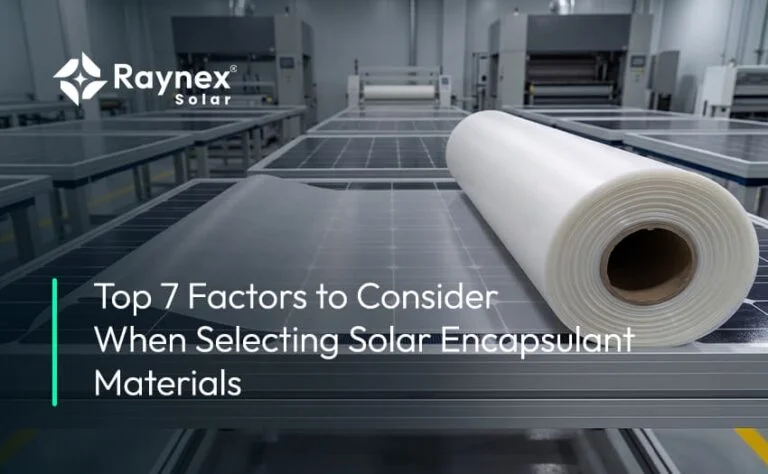
Choosing the right solar encapsulant materials are very important when making solar panels. One key step is solar encapsulant selection, which helps protect the solar cells and keeps them working well for a long time. The encapsulant works like a protective shield. It keeps the panel safe from heat, water, and damage, while still letting sunlight pass through. Raynex Solar is a trusted manufacturer of solar encapsulant sheets that helps solar companies around the world. They provide strong and high-quality materials that improve the performance and life of solar panels. By choosing the right encapsulant, manufacturers can build solar panels that are safer, more efficient, and last longer.
Here are some of the most popular solar encapsulant materials used in solar panels.
The main job of a solar encapsulant is to let sunlight pass through to the solar cells. The more light that reaches the cells, the more electricity the panel can produce.
When choosing a material, look for one that:
Even a small drop in light can reduce how well the solar panel works. That’s why this factor is very important in solar encapsulant selection.
Solar panels stay outside all the time. They face strong sunlight, rain, heat, and cold weather. A good encapsulant should:
If the material is weak, it can turn yellow or get damaged. This reduces how well the panel works. So, good solar encapsulant selection means choosing materials that can last long in all weather conditions.
Adhesion strength means how well the encapsulant sticks to other parts of the solar panel, like the glass and solar cells. Good adhesion is important because it:
When choosing a solar encapsulant for better Solar Panel Protection, pick a material that sticks well. This helps protect the panel and makes it last longer.
Solar panels get very hot when they are in the sun. So, the material inside them must handle heat well. A good encapsulant should:
If the material cannot handle heat, the solar panel may stop working properly over time.
Solar panels carry electricity, so they need to be safe. The encapsulant acts like a protective shield that keeps electricity from leaking out. A good encapsulant should:
When choosing a encapsulation materials, make sure it has strong insulation and meets safety standards.
Moisture (water) can damage solar panels over time. It can cause rust, reduce power, and even lead to failure. A good encapsulant helps keep moisture out and protects the solar cells inside.
Look for materials that:
Picking the right encapsulant helps solar panels last longer and work better.
Solar panels are made to last for many years usually 25 years or more. So, it’s important to choose an solar encapsulant materials that stays strong and works well over time.
A good encapsulant should:
When choosing a solar encapsulant, make sure it has been tested and approved by industry standards.
Choosing the right solar encapsulant materials for a solar panel’s protective layer is important. It helps the panel work well and last a long time. When you understand simple things like strength, how clear the material is, and how well it handles heat and water, you can make better choices. Raynex Solar is a trusted manufacturer of solar encapsulant sheets. They provide high-quality materials that help make solar panels strong, reliable, and long-lasting.
Solar encapsulant selection means choosing the best solar encapsulant materials to protect solar panels. Common materials include EVA, POE, and EPE. These materials help keep the solar cells safe and working well. Choosing the right material is important because it helps the solar panel last longer and work well in different types of weather.
Choosing the right solar encapsulant is very important because it affects how well a solar panel works, how long it lasts, and how reliable it is. A good encapsulant protects the solar cells from water, sunlight (UV rays), and damage. This helps the solar panel keep producing energy properly for a long time.
Thermal stability means the material stays strong and works well even when it gets very hot or when the weather keeps changing. It helps prevent deformation, delamination, and efficiency loss.
Solar encapsulant sheets have some important features. They let sunlight pass through easily, protect against harmful UV rays, and stick well to other parts. They can handle heat, keep electricity safe, and stop moisture from getting inside. All these qualities help solar panels work better and last longer.
The most common encapsulant materials used in solar panels are EVA, POE, and EPE. Each of these materials has its own benefits. They help make the panels strong, protect them from water, and improve how well they work.