

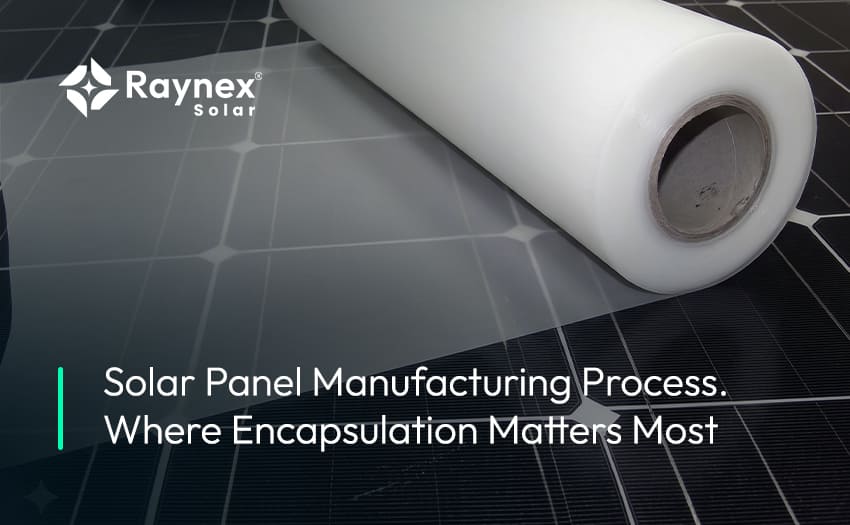
The solar panel manufacturing process is how solar panels are made to turn sunlight into electricity. It may sound complex, but it is simply a step-by-step method where different parts are put together to create a working panel. One important part of this process is protecting the solar cells so they last a long time. Encapsulant materials act like a protective layer that keeps the solar cells safe from heat, moisture, and damage. Raynex Solar Pvt Ltd is a trusted company that makes these important materials. They help improve the strength and performance of solar panels, making sure they work well for many years.
Solar panels help turn sunlight into electricity. Let’s look at the flexible solar panel manufacturing process steps in a simple way:
1. Making Silicon
Solar panels start with a material called silicon. It is cleaned and shaped into thin slices called wafers.
2. Creating Solar Cells
These wafers are treated so they can catch sunlight and turn it into electricity. Now they are called solar cells.
3. Connecting the Cells
Many solar cells are joined together using thin metal strips. This helps them work as one unit.
4. Encapsulation (Very Important Step)
In this step, the cells are covered with special protective layers. This is called solar module encapsulation. It protects the cells from:
5. Sealing the Panel
The layers are pressed together using heat. Then a strong frame is added to hold everything in place.
6. Testing the Panel
Each panel is tested to make sure it works well and is safe to use.
By following the solar panel manufacturers process, companies can produce high-quality, reliable solar panels that generate clean energy efficiently for many years.
Solar module encapsulation means protecting solar cells by sealing them between layers so they stay safe and work well.
What layers are used?
These layers are heated and pressed together to form one solid panel.
Encapsulation is one of the most important steps in the solar panel manufacturing process. It helps protect the solar cells and keeps the panel working well for many years. Here’s why it matters:
Encapsulant materials are special layers used inside solar panels. They protect the solar cells and help them work better for a long time. Here are the main types:
1. EVA (Ethylene Vinyl Acetate) – EVA is the most common material used in solar panels.
2. POE (Polyolefin Elastomer) – POE is a stronger and more advanced material.
3. EPE (EVA–POE–EVA) – EPE is a mix of EVA and POE.
The solar panel manufacturing process has many steps, but one of the most important is protecting the solar cells so they last a long time. Good materials help panels work better and stay strong in all weather. Raynex Solar Pvt Ltd is a trusted manufacturer of solar encapsulant materials. Their products help keep solar panels safe, efficient, and long-lasting.
The solar panel manufacturing process is a series of steps used to produce photovoltaic modules from raw silicon. It explains how silicon is cleaned, shaped into thin slices, turned into solar cells, joined together, and then sealed to keep them safe. Then the panels are framed and tested to make sure they work well and last a long time.
The most common encapsulation materials include:
Lamination uses heat and pressure to stick all the layers together. This helps seal the solar cells properly. It makes the panel stronger and protects it from damage.
Good solar panels are made with strong protective layers. Because of this, they can last 25 to 30 years or even longer, while still working well and losing very little power over time.
Encapsulation is important because it protects solar cells from water, sunlight, and damage. It helps solar panels work well for a long time and keeps them from wearing out quickly.