

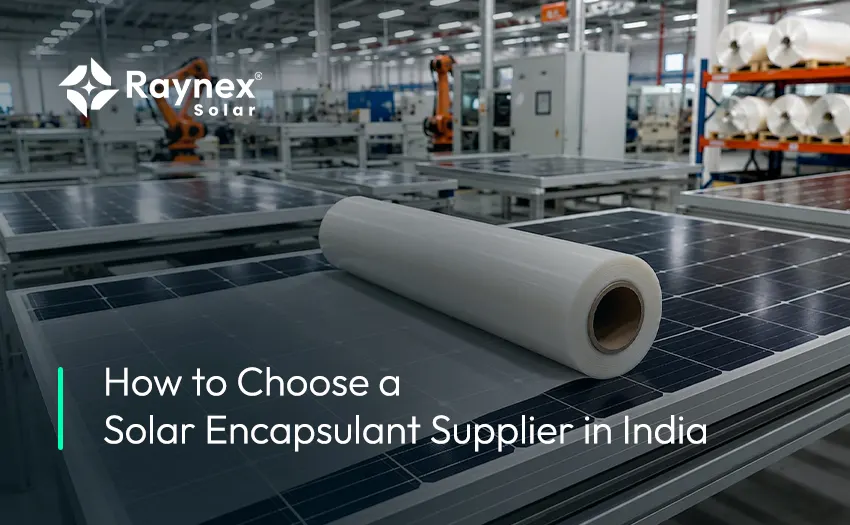
Choosing the right solar encapsulant supplier in India is one of the most important aspects of the decision-making process for solar module manufacturers. A good encapsulant protects solar cells from humidity, dust, ultraviolet radiation, and bad weather for many years. Even the most efficient solar cells cannot work in the absence of a good encapsulant.
Currently, the solar market in India is developing considerably and there are many suppliers to choose from. There are also differences among suppliers in terms of the quality of the product, technical support, production processes, and the ability to deliver installation in due time.
In this guide, we will show you exactly how to choose a solar encapsulant supplier that fits your needs perfectly.
When solar module system build panels, they promise their customers that those panels will work for decades. The encapsulant is the only thing protecting the cells from moisture, heat, and dirt. If the material is poor quality, the panel can stop working very quickly. This is why picking a solar encapsulant supplier is not just about finding the lowest price. It is about finding a partner you can trust.
In India, the weather is very tough. We have high heat, heavy rain, and lots of dust. A reliable solar pv module manufacturer in india knows that the encapsulant must be able to handle these extremes. If the glue fails, the cells crack or corrode. This leads to unhappy customers and expensive warranty claims. Choosing the right supplier means you are choosing peace of mind for your business and your clients.
Not all suppliers are the same. Some might offer a great price but have slow delivery. Others might have great material but no technical support. To find the best solar encapsulant supplier for PV module production, you need to look at several key things.
Let’s break them down one by one so you know exactly what to ask when you call a potential partner.
The first thing to check is the type of solar encapsulant material they offer. Different panels need different materials.
However, as technology changes, many solar module manufacturers in India are moving toward POE (Polyolefin Elastomer) or EPE (a mix of both).
You need to look at the “report card” of the material. This means checking how clear the material is and how well it sticks to the glass and cells. Good transparency is vital because it lets more sunlight reach the solar cells. If the material is slightly cloudy, you lose power right from the start.
Another big metric is “UV resistance.” Since panels sit in the sun all day, the material must not turn yellow or become brittle over time.
Ask your solar encapsulant supplier in India for data sheets that show how their material performs after thousands of hours of testing. If they cannot show you clear proof of performance, it is better to look elsewhere.
Timing is everything in business. If you are a solar module manufacturing company in india, you cannot afford to have your machines sitting idle because you ran out of film.
You must ask the supplier about their daily and monthly production capacity. Do they have enough machines to meet a big order? Do they keep enough stock in their warehouse for emergencies?
Lead times are also very important. This is the time it takes from when you place an order to when it arrives at your door. A supplier based in India might have shorter lead times than an overseas one. However, you still need to make sure they have a reliable shipping system.
Ask them how they handle sudden increases in demand. A partner who can grow with your business is much more valuable than one who is always running out of stock.
Quality is not just a promise; it must be proven. You should only work with a solar encapsulant supplier for PV module that has the right certificates. Look for ISO 9001, which means they have a good quality management system.
More importantly, check for international solar certificates like TUV or UL. These groups test the material to make sure it can survive harsh outdoor conditions.
In India, following the ALMM (Approved List of Models and Manufacturers) rules is also becoming very important. If the supplier follows these standards, it gives you peace of mind. It means their products are safe and reliable.
Don’t just take their word for it; ask to see copies of their test reports. A trustworthy company will be happy to share these documents with you because they are proud of their quality.
Everyone wants a good price, but the cheapest option is often the most expensive in the end. When you talk to a solar module manufacturer in India, ask about value instead of just price. A slightly more expensive film might make your panels last five years longer. That extra life is worth much more than the small savings you get today.
Also, check the warranty terms. What happens if the film fails after five years? Does the supplier offer any support?
A company that stands behind its product with a strong warranty is a company you can trust. They are betting on their own quality. Compare the total cost of ownership, including shipping and potential waste, rather than just the price per square meter.
Sometimes things don’t go as planned. Maybe the film isn’t sticking right, or your lamination machine needs a different temperature setting. This is when you need an expert to talk to. A great supplier will have a technical team that can visit your factory and help you fix problems. They should be like a partner, not just a vending machine.
Good customer service means they answer your calls and emails quickly. They should be able to give you advice on how to store the film so it doesn’t get ruined by humidity.
In the fast-moving solar world, having a knowledgeable friend to call can save you days of frustration. Choose a supplier that values your success as much as their own.
Here are a few reasons why solar manufacturers pick Raynex Solar:
Picking the perfect solar encapsulant supplier in India takes time, but it is one of the most important things you will do. You need to look past the price tag and check the material quality, the technical specs, and the company’s reputation. Always verify their certifications and make sure they can supply you consistently as your business grows.
Remember, the encapsulant is what protects your investment for the next 25 years. By following the factors we discussed, you can find a partner that helps you build high-quality solar modules that people can trust. Don’t settle for less when it comes to the safety and life of your solar panels.
Start your search today by looking for a supplier that treats you like a partner and cares about the future of energy in India.
To find the best supplier, look for one that offers a variety of materials (EVA and POE), has strong international certifications, and provides fast delivery. It is also important to check if they offer technical support to help you use the material correctly in your factory.
It depends on your panel. EVA is great for standard modules and is very cost-effective. POE is better for high-efficiency or bifacial solar panels because it blocks moisture better. EPE is a middle-ground option that combines the benefits of both.
Your supplier should have certifications like TUV, UL, and IEC. these prove the material has passed strict safety and durability tests. Using certified materials makes it easier for you to sell your panels globally.
The encapsulant protects the solar cells. If it is poor quality, the cells can get wet, corrode, or lose power. High-quality encapsulant ensures the panel lasts for 25 years or more without failing.
Yes, many professional suppliers can adjust the thickness and width of the rolls to fit your specific laminating machine. Always ask the supplier if they can customize the order to reduce waste in your production line.
A reliable supplier provides material with high transparency, which lets more light in. They also ensure the material doesn’t yellow over time. This keeps the power output high for the entire life of the solar panel.