
Solar panels are designed to operate for more than 25 years while being exposed to harsh environmental conditions such as heat, humidity, ultraviolet radiation, wind, and dust. While solar cells generate electricity, the long-term reliability of a solar module largely depends on the materials that protect those cells. One of the most critical components responsible for this protection is the solar panel encapsulation material. Encapsulation materials act as a protective layer within the solar module, ensuring that the solar cells remain safe, efficient, and mechanically stable throughout the lifespan of the panel. In this article, we will explore the importance of solar panel encapsulation material, how encapsulant layers in solar panels function, and their role in overall solar module protection.
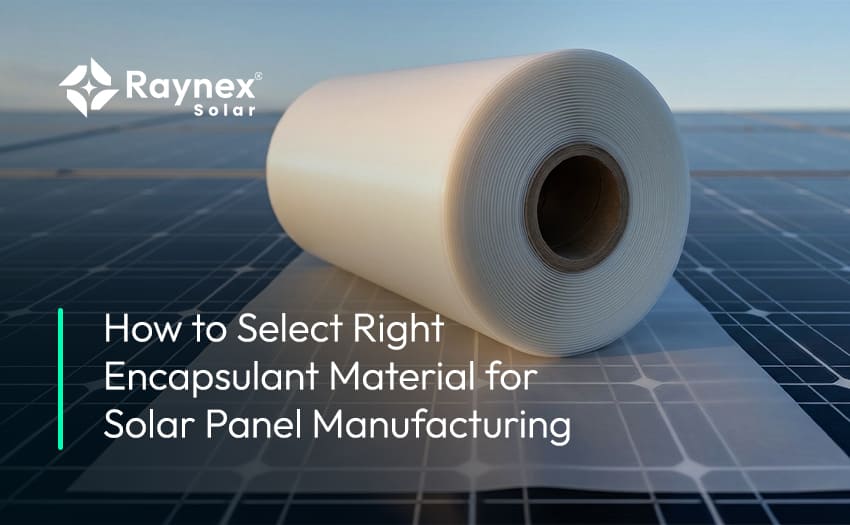
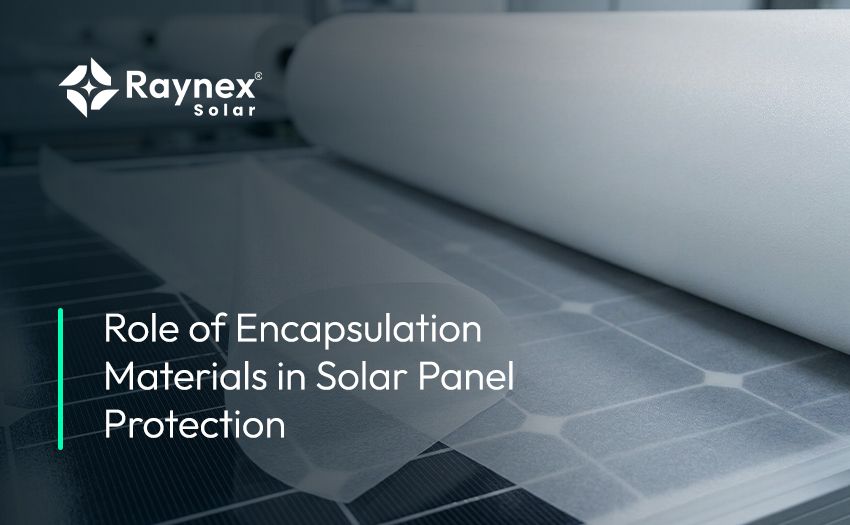
A solar panel encapsulation material is a polymer layer placed above and below the solar cells inside a photovoltaic module. During the module manufacturing process, these materials are heated and laminated to bond the solar cells with the glass and backsheet layers. The encapsulant forms a transparent protective cushion around the fragile solar cells. This layer ensures that the cells remain protected from environmental damage while still allowing sunlight to pass through with minimal loss. Because solar cells are extremely delicate, the encapsulation layer plays a vital role in maintaining both the structural integrity and performance of the solar module.
A typical solar panel consists of several layers that work together to produce and protect electrical energy. The encapsulant layers in solar panels are located between the solar cells and the outer structural materials.
The basic structure of a solar module includes:
These encapsulant layers in solar panels ensure that all module components remain securely bonded and protected throughout the panel’s lifespan.
Encapsulation materials serve multiple critical functions that contribute to overall solar module protection.
Protection from Moisture
Moisture is one of the biggest threats to solar modules. If water vapor enters the module, it can cause corrosion of electrical connections and degradation of solar cells. A high-quality solar panel encapsulation material acts as a barrier that reduces moisture ingress.
Mechanical Stability
Solar modules experience thermal expansion, wind loads, and mechanical stress over time. Encapsulation materials provide cushioning and flexibility that help absorb these stresses, preventing cracks or damage to the solar cells.
Electrical Insulation
Encapsulation layers also serve as electrical insulation between the solar cells and other module components. This insulation helps prevent leakage currents and ensures safe operation of the solar module.
Optical Transparency
Encapsulants must allow maximum sunlight to reach the solar cells. High optical transmission ensures that the panel maintains high energy conversion efficiency.
UV and Environmental Resistance
Solar panels are exposed to constant sunlight and ultraviolet radiation. Encapsulation materials must be resistant to UV degradation so they do not discolor or lose transparency over time.
Several types of solar panel encapsulation material are used in photovoltaic module manufacturing today. The most common materials include:
Each of these materials contributes differently to solar module protection, depending on the application and environmental conditions.
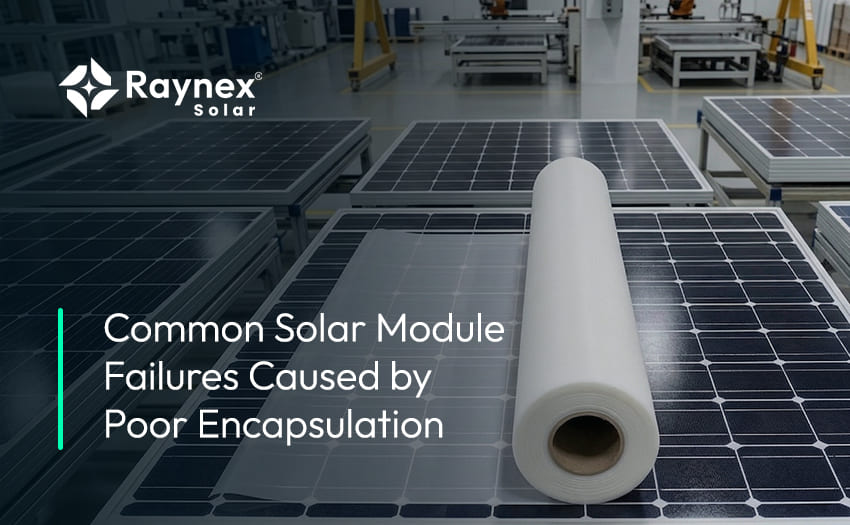
The lifespan of a solar module depends heavily on the quality of its encapsulation materials. Poor encapsulation can lead to several problems such as:
High-quality encapsulant layers in solar panels help prevent these issues, ensuring stable performance and longer operational life.
As solar technology advances, solar modules are becoming more powerful and efficient. High-efficiency solar cells, bifacial modules, and large-scale solar installations require advanced encapsulation materials that provide stronger protection and durability. Manufacturers are continuously improving solar panel encapsulation material to enhance:
These innovations are helping the solar industry produce panels that can reliably operate for decades.
At Raynex Solar Pvt. Ltd., we recognize the critical role that encapsulation materials play in solar module performance and durability. Our focus is on developing advanced encapsulation solutions that provide strong adhesion, high transparency, and long-term environmental protection. By leveraging modern material engineering and manufacturing processes, Raynex Solar Pvt. Ltd. aims to support solar manufacturers with high-quality encapsulation materials that contribute to reliable and efficient photovoltaic systems.
Encapsulation materials are a vital part of solar module design and play a major role in solar module protection. The solar panel encapsulation material protects fragile solar cells from moisture, mechanical stress, and environmental damage while ensuring maximum sunlight transmission. With advancements in material technology, modern encapsulant layers in solar panels are becoming more durable and efficient. These improvements are helping solar modules achieve longer lifespans and more reliable performance. As the solar industry continues to expand, high-quality encapsulation materials will remain essential for building durable, high-performance solar panels capable of powering the future of renewable energy.
Encapsulation materials are protective layers used inside solar panels to seal and protect photovoltaic (PV) cells. These materials surround the solar cells and shield them from moisture, dust, mechanical stress, and environmental damage while allowing sunlight to pass through efficiently.
Encapsulation materials play a critical role in solar panel durability and performance. They prevent moisture ingress, reduce mechanical stress on solar cells, provide electrical insulation, and protect against UV radiation and environmental degradation, ensuring long-term reliability of the solar module.
The most commonly used encapsulation materials include EVA (Ethylene Vinyl Acetate), POE (Polyolefin Elastomer), and PVB (Polyvinyl Butyral). Among these, EVA is the most widely used due to its transparency, adhesion properties, and cost-effectiveness.
Encapsulation materials influence solar panel efficiency by allowing maximum light transmission to reach the photovoltaic cells. High-quality encapsulants maintain optical clarity over time and prevent degradation that could reduce energy output.
Encapsulation materials are applied during the lamination process. The solar cells are placed between layers of encapsulant sheets, usually between the glass and backsheet, and then heated and vacuum-laminated to create a sealed and durable solar module structure.