

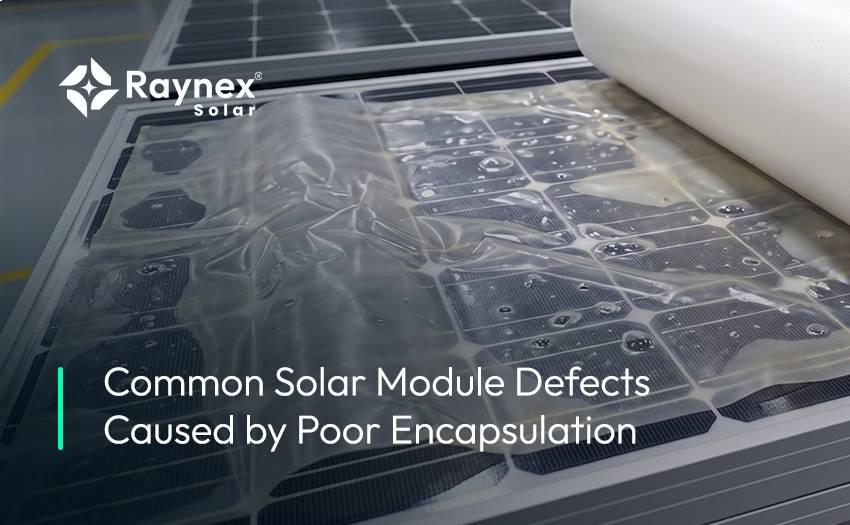
Solar panels help us make clean energy from the sun. But sometimes, they stop working properly because of solar module defects. These defects can happen when the parts inside the panel are not protected well. One important part of a solar panel is the encapsulant sheet. It acts like a protective layer that keeps the solar cells safe from dust, water, and heat. Raynex Solar Pvt. Ltd. is a trusted manufacturer of solar encapsulant sheets. They create high-quality materials that help protect solar panels and make them last longer.
Encapsulation is a simple but important process in making solar panels. It means covering and sealing the solar cells inside the panel using special protective materials.
These materials are placed between:
Here are some common solar panel defects caused by poor encapsulation, explained in an easy way:
This happens when the layers of a solar panel start to peel apart.
Sometimes small air bubbles get trapped inside the panel.
The clear layer turns yellow over time.
Moisture enters the panel due to poor sealing.
These look like thin dark lines on the panel.
High-quality encapsulation is very important for solar panels. It helps protect the solar cells and keeps the panel working well for many years. Here’s why it matters:
Keeping solar panels safe and strong is very important. Here are some easy ways to prevent encapsulation problems:
Use good quality materials: Always choose strong and tested encapsulant sheets. Better materials last longer and protect the solar cells well.
Follow the right process: Make sure the lamination process (heat and pressure) is done correctly. This helps all layers stick together properly.
Store materials carefully: Keep materials in a clean, dry place. Heat, dust, or moisture can damage them before use.
Check quality regularly: Test the materials to make sure they are strong and can handle sunlight and weather.
Use modern machines and technology: Good equipment helps make better solar panels with fewer defects.
Solar panels can have problems if they are not made properly. Many solar module defects, like peeling layers or damage inside the panel, happen because of poor encapsulation. This is why using good materials and the right process is very important. Raynex Solar a trusted manufacturer of solar encapsulant sheets, help prevent these problems.
Solar panel delamination happens when the layers inside a solar panel start to come apart. These layers include the glass, a protective middle layer, and the solar cells. This can happen if the layers were not stuck together properly, if low-quality materials were used, or if the panel was not made the right way.
Encapsulation issues can reduce light transmission, allow moisture penetration, and cause electrical failures. This results in lower energy output, faster degradation, and a shorter lifespan of the solar module.
Encapsulant yellowing occurs due to prolonged UV exposure and the use of low-quality materials. This discoloration reduces light transmission and negatively impacts power generation.
Common encapsulation materials include EVA (Ethylene Vinyl Acetate), POE (Polyolefin Elastomer), and EPE. These materials protect solar cells from environmental damage and ensure long-term performance.
Bubbles can form when air gets trapped during the lamination process. This usually happens if the temperature or pressure is not right, or if the surface is dirty. These bubbles can lead to hotspots and reduce the module’s efficiency.