

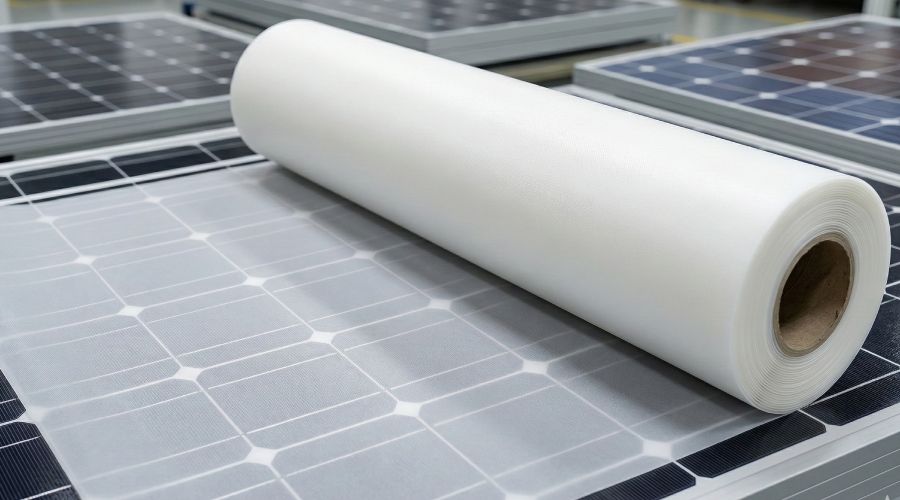
Solar EVA (Ethylene Vinyl Acetate) Encapsulant is a transparent polymer film used in photovoltaic (PV) modules to encapsulate and protect solar cells. It acts as a bonding and protective layer between the front glass, solar cells, and backsheet.
During the lamination process, EVA melts and cures to form a strong, durable seal that protects solar cells from moisture, dust, UV radiation, and mechanical stress.
Solar EVA Encapsulant is widely used across the solar industry due to its excellent transparency, flexibility, adhesion strength, and cost-effectiveness.
| Property | Typical Value |
|---|---|
| Material | Ethylene Vinyl Acetate (EVA) |
| Thickness | 0.3 mm – 0.6 mm (customizable) |
| Light Transmittance | ≥ 91% |
| Gel Content | ≥ 75% |
| UV Resistance | Excellent |
| Adhesion Strength | High |
| Operating Temperature Range | -40°C to +85°C |
| Shelf Life | 6–12 months (recommended storage conditions) |









EVA encapsulant protects and bonds solar cells within the module, shielding them from moisture, UV radiation, and mechanical stress.
Yes, EVA is widely used in most standard monofacial solar modules.
When properly laminated, EVA encapsulant supports solar module performance for 25 years or more.
EVA is a single-layer material, while EPE has a multi-layer structure (EVA-POE-EVA) offering enhanced moisture and PID resistance.
Standard EVA provides basic protection, but for higher PID resistance, EPE or POE encapsulants are recommended.